

Douro Harvest Season 2026: When to Go and What to Expect
The Douro Valley in harvest season is something most wine lovers talk about but few actually plan for properly. Yes, the vineyards turn amber. Yes, families pick grapes before dawn. Yes, the smell of fermenting wine fills every village. But harvest season is also the most crowded time of year, the most expensive — and if you book the wrong thing, the most disappointing.
This guide tells you exactly when it happens, what's genuine versus theatrical, which quintas are worth visiting, and how to find a real grape-stomping experience rather than a photo op. Written by locals who live this every September.
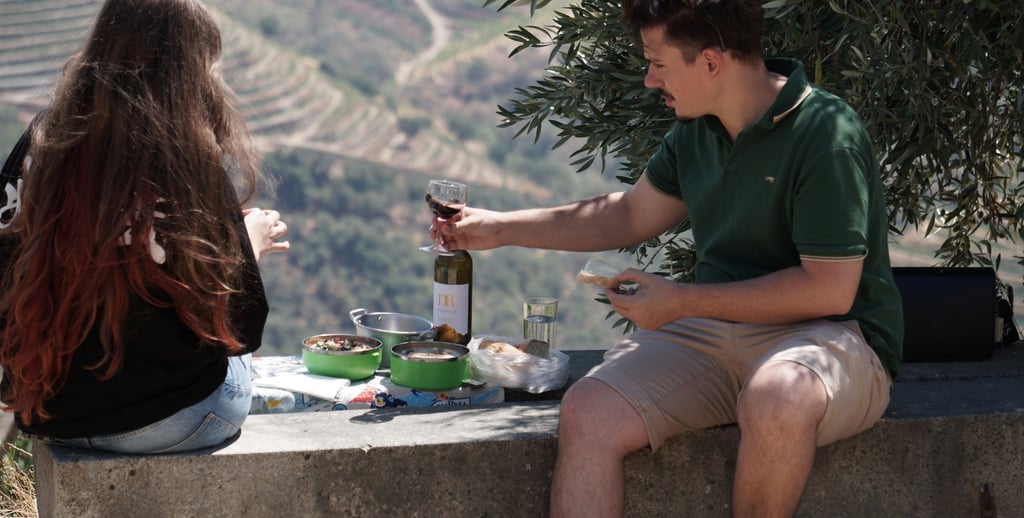
When the Harvest Actually Happens
The harvest (vindima in Portuguese) typically runs from mid-September to mid-October. But "typically" is doing a lot of work in that sentence.
The exact timing shifts year to year depending on the summer heat. In a hot, dry year like 2022, picking started as early as late August. In a cooler year, it can push into late October. The Douro is a large region — over 250,000 hectares of demarcated territory — and harvest doesn't happen all at once. Lower-altitude plots near Régua pick earlier; the schist terraces high above Pinhão pick last.
The peak window — when you'll see the most activity, the most colour, and the best atmosphere — is usually the last two weeks of September. That's when the action is concentrated and the golden light on the terraces is extraordinary.
What You Can Join In — And What's Just a Photo Op
Here's the honest breakdown. Most of what's marketed as "harvest experiences" is theatre: you arrive at a quinta, someone shows you a basket of grapes, you walk a vineyard for 10 minutes, then sit down for a tasting. It's fine. But it's not the vindima.
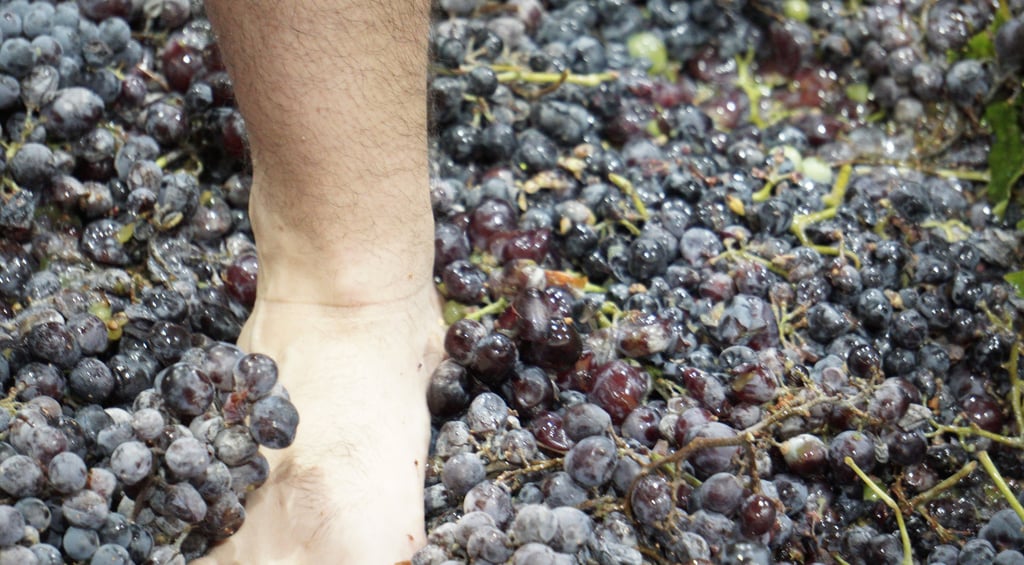
A real harvest experience involves picking grapes in the early morning (starts at 6–7am, often finished by noon), walking the same steep schist terraces the workers walk, and attending the foot-treading (pisa do pé) in a traditional stone lagar — usually in the evening, with accordions playing.
The pisa do pé is genuinely special. Done with 6–10 people in a lagar, it lasts 2–3 hours and ends with a shared meal. If a quinta offers you this, take it — it's increasingly rare even in the Douro.
Which Quintas Open to Visitors During Harvest
Not all quintas open during harvest — many are in full production mode and can't host visitors. Here are the ones with a genuine track record:
Quinta do Crasto (Sabrosa area) — family-run, proper pisa do pé experience, not a mass-tourism operation. One of our favourites. Book well in advance.
Quinta do Vallado (near Régua) — one of the most accessible quintas, well-organised harvest visits, strong on wine education.
Quinta de la Rosa (Pinhão) — structured harvest experiences with accommodation options; good for families.
Quinta do Panascal (Távora-Varosa) — Port wine producer, good infrastructure for visits.
The smaller family quintas — the ones without websites or booking systems — are often the most genuine. If you're coming with us on a private tour, we know which doors to knock on.
How to Find a Real Grape-Stomping Experience
Search "grape stomping Douro" and you'll find dozens of tours all claiming to offer the authentic pisa. Most of them offer a 15-minute tourist version at a quinta doing this 20 times a day in September.
How to tell the difference:
Small group size — A real pisa is done in a lagar with 6–10 people max. If a tour has 30 people, it's theatrical.
Evening timing — Traditional pisa happens after the grapes are picked and processed. If it's offered at 11am, it's for the photos.
2+ hours minimum — Anything shorter is a demo, not an experience.
Working quinta — The quinta should actually be producing wine, not just hosting tourists.
The best approach: combine a private tour with a quinta visit timed for the actual harvest. That's exactly what we do — we arrange direct access to quintas that don't take public bookings.
Weather, What to Pack, and What to Expect
September in the Douro is warm — 28–32°C in the day, dropping to 15–18°C at night. The air is dry, the light is golden, and the terraces hold the heat well into the evening.
What to bring: A sun hat and light clothing (long sleeves protect from scratchy vines and sun). Sturdy closed shoes — the schist terraces are steep and slippery with grape juice by mid-morning. A light jacket for evenings — it cools fast when the sun drops behind the hills. Cash — small quintas don't always have card machines.
What to expect: Harvest is joyful but purposeful. Workers start before dawn and finish when the tractor can't fit any more crates. The atmosphere is festive. If you're joining a real picking morning, don't be late — the whole village starts at 6:30am.
Booking Timing — Why September Weekends Are Gone by July
This is the part most people get wrong. They decide in August they want a harvest experience. By then, September weekends are already full.
The best quintas with genuine pisa experiences take 20–30 visitors maximum. They fill up in June and July. Private tours timed for the harvest window also go early — there are only 5–6 weekends in peak vindima season and everyone wants the same dates.
Our rule: if you're visiting between 15 September and 10 October, book at least 8 weeks in advance. For a Saturday or Sunday, make it 10–12 weeks.
If you book directly with a quinta, check cancellation policies carefully — harvest timing shifts with weather. A late-breaking heatwave can move picking forward by a week.
Frequently Asked Questions
When exactly is Douro harvest season in 2026?
Based on historical patterns, harvest is expected to run from approximately 10–15 September (early, lower-altitude plots) through mid-October. Peak activity: the last two weeks of September.
Can I participate in grape picking?
Yes, some quintas allow visitors to join the picking. It starts early — usually 6:30am — and involves 3–4 hours of real physical work on steep terraces. It's genuinely fun if you're prepared for it.
Is grape stomping (pisa do pé) still done?
Yes, but mainly as a cultural experience. Modern wineries use mechanical equipment for production; the pisa is preserved at smaller family quintas. A good pisa runs 2+ hours with live music and a shared meal.
Is harvest season more expensive?
Yes, significantly. Hotels in the valley charge 40–80% more in September. Quinta experiences are also priced higher. Budget accordingly and book early.
Should I book a tour or go independently?
For harvest, a private guided tour gets you access to places you can't reach alone. The best quintas prioritise established contacts over walk-in visitors.